The Morning I Met Matthew Dicks in a Eurostar Lounge
I just got back from a week in the UK, and y'all, I'm still buzzing.
I was teaching the Hitmakers songwriting retreat with Judy Stakee at Hawkwood in the Cotswolds. Rolling hills, old stone buildings, and a room full of songwriters who showed up ready to work. It was my first time co-hosting an international retreat and it was incredible. Songs got finished. People who'd been stuck for months walked out with something real. That's the stuff I live for.
But that's not really what this post is about. Well, sort of.
Songs and offers come from the same place
Here's something I've believed for a long time. Business and songwriting are pretty much the same thing. They're both creative.
Think about it. We make songs out of nothing. Literally nothing. A blank page, a guitar, and a feeling you can't quite name yet. And in business, we make offers out of nothing too. Nobody hands you a coaching package. You dream it up.
With a song, you imagine what you want it to be before it exists. With an offer, you imagine where you want your client to be at the end. Same muscle. Same creative energy.
And they've got one more thing in common. Story.
Story is what connects a listener to a song. And story is what connects your offer to the person who needs it. Without the story, it's just chords. Or just a price tag.
The book I won't shut up about
I've read a ton of business books in my time as an entrepreneur. Some amazing. Some... ehhh. But Stories Sell by Matthew Dicks is one of my all-time favorites. I recommend it to folks constantly. When Jenn started running social media for us, guess what I handed her? Yep.
So keep that in mind for what happens next.
7am in the Eurostar lounge
Jenn and I are headed to Paris after the retreat. It's 7-something in the morning. We're sitting in the Eurostar lounge, I'm half awake, and right across from us I see, Matthew Dicks.
My first thought, no. That's not him. Like, what are the chances? You're tired, Mike. You're clearly delirious.
So I did the very normal thing. I got in line for a water and peeked at his Instagram. Then peeked a little more. Okay. It's him. I'm convinced.
And then the next voice kicks in. Ehhh. He doesn't want to hear from me. Leave the guy alone.
Jenn looks right at me. "Say hi. Go!"
So I did.
And oh man, I'm so glad I did. He was incredibly kind. The whole encounter was the best.
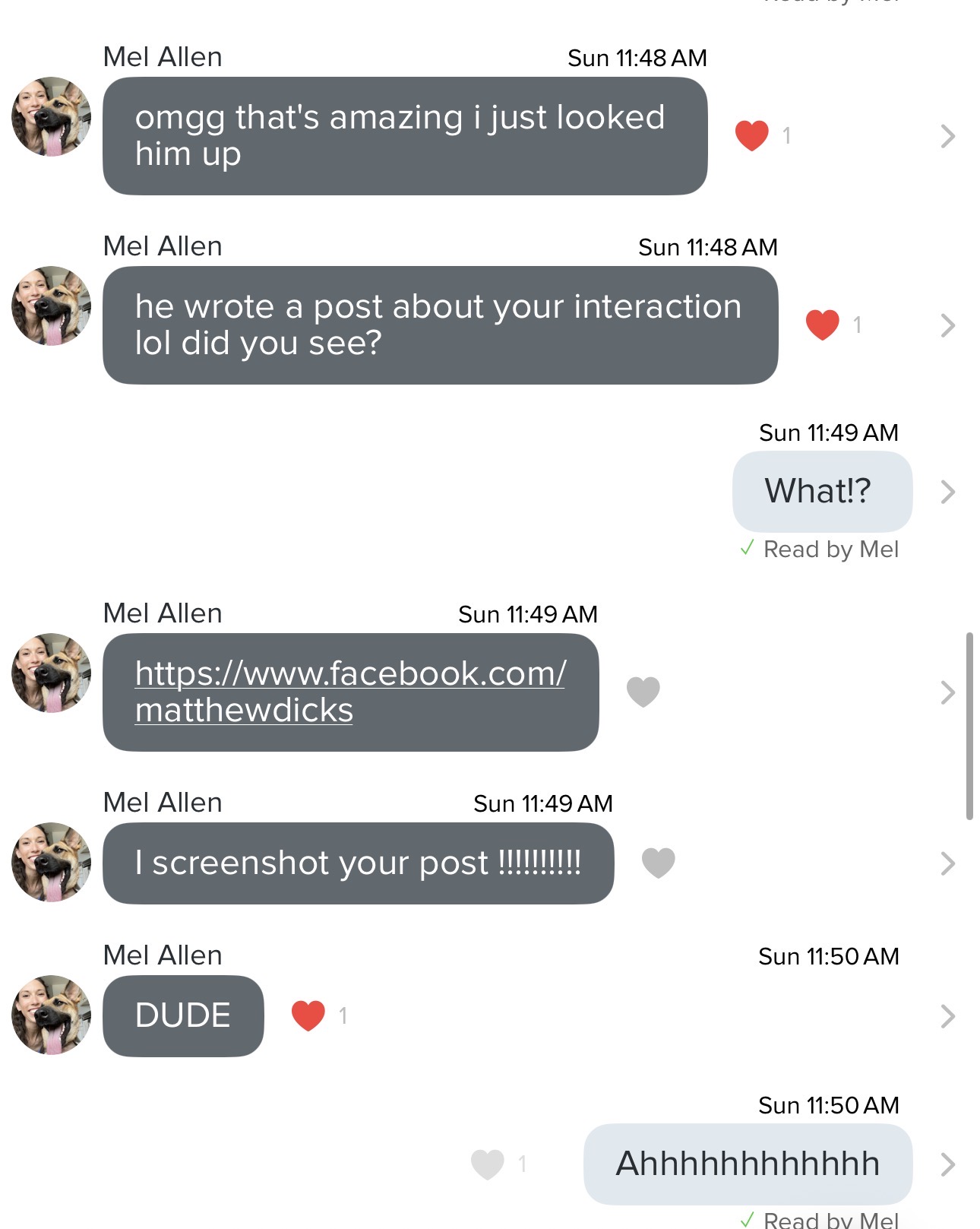
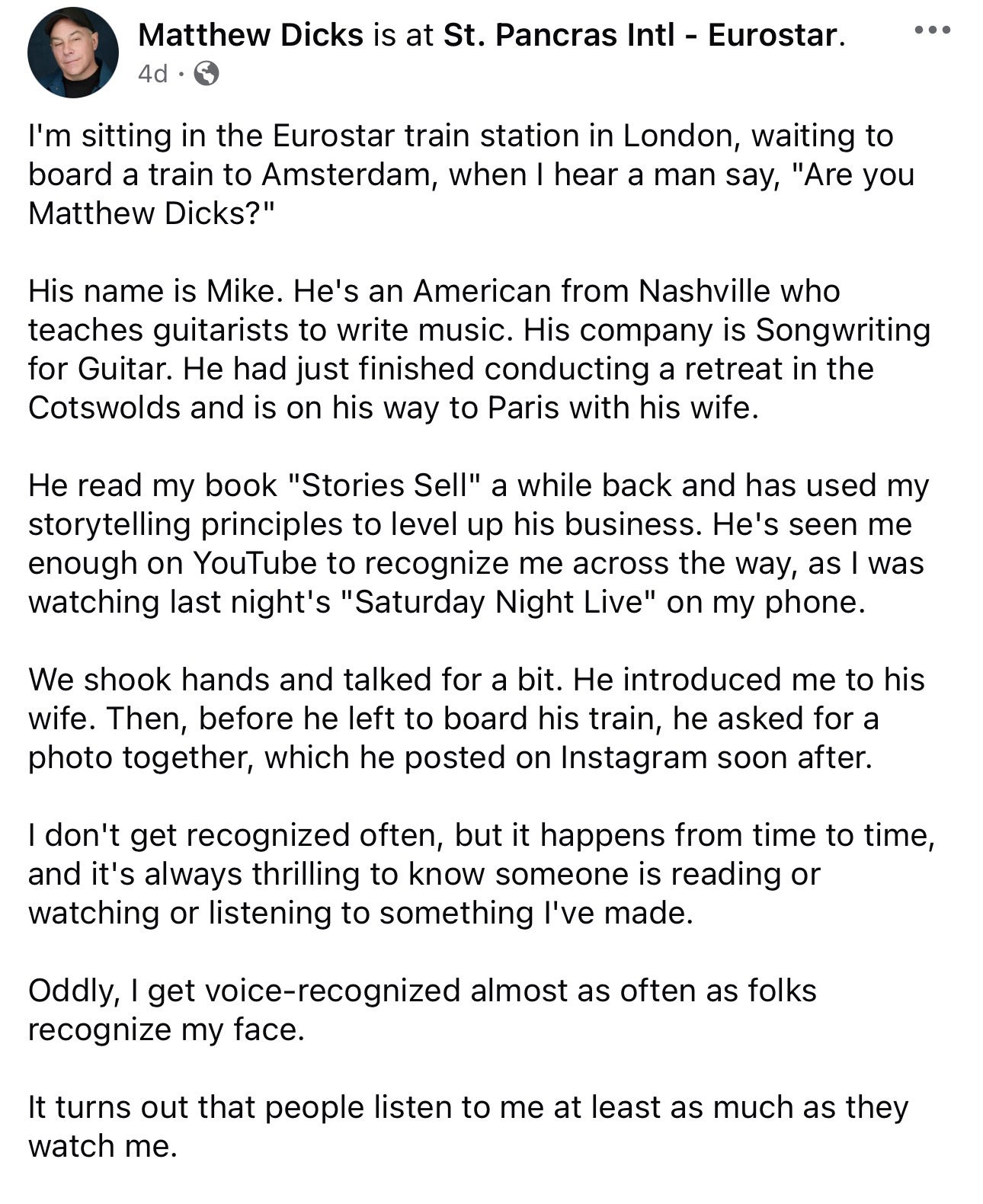
Here's the kicker. Fast forward, Jenn and I are standing on top of the Eiffel Tower, and my assistant sends me something. Matthew wrote about our encounter. He wrote about it! I'm standing on the Eiffel Tower reading a story about me, written by the guy who wrote the book on stories. You can't make this stuff up.
So what's the point?
Honestly? I'm not totally sure. And I'm okay with that.
Sometimes a song can just be a song. And sometimes a story can just be a story.
But if I had to pull a moral out of it, it's this. Creating is, and continues to be, the best way I know how to make a living. Songs, offers, retreats, this blog. All of it started from nothing. And all of it has connected me to thinkers and entrepreneurs I never would have crossed paths with otherwise. Some I've met. Some I haven't met yet. And I'm so glad I keep reaching my hand out to introduce myself.
That little voice that said "he doesn't want to hear from you"? It's the same voice that tells you your song isn't ready, or nobody wants what you're making. That's a stall pattern. Sometimes all you need is somebody in your corner saying "Go!"
So say hi. Write the song. Make the offer. You can't edit what doesn't exist.
Want these in your inbox?
New essays on imagination, offers, and building a lean creative business. Once a week.